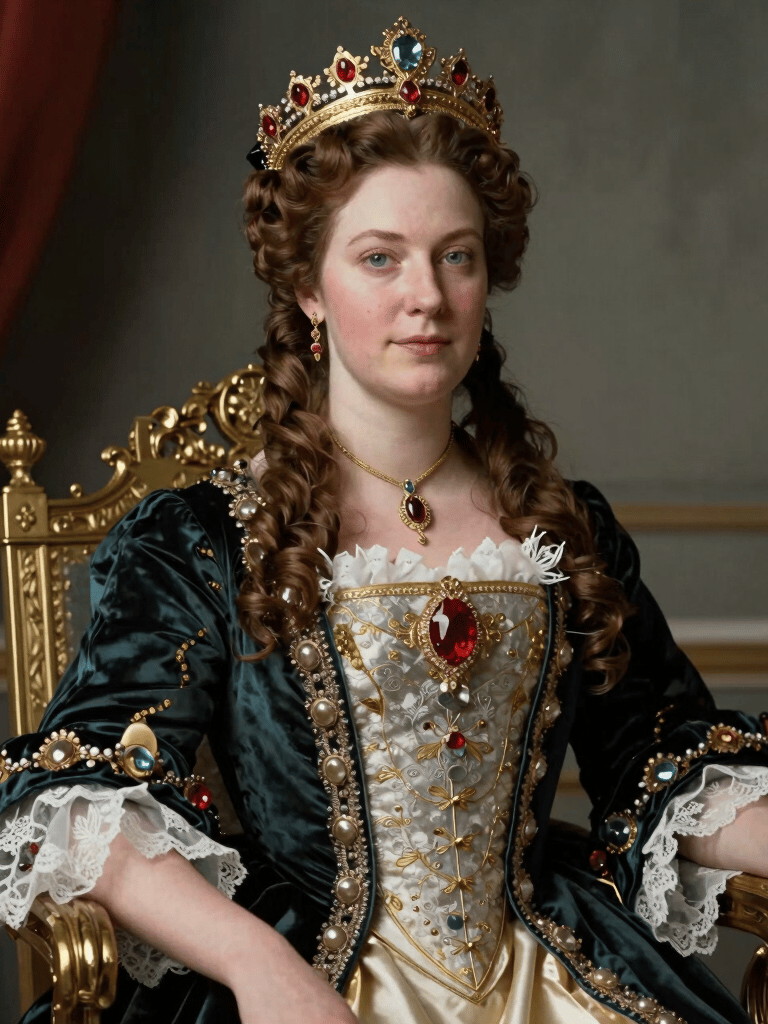

Cleopatra VII Philopator (69 BCE - 30 BCE)
Cleopatra VII Philopator, the last active ruler of the Ptolemaic Kingdom of Egypt, remains one of the most misunderstood and fascinating women of the ancient world. Born in 69 BCE in the Macedonian Greek Ptolemaic dynasty that ruled Egypt after the death of Alexander the Great, Cleopatra inherited a kingdom plagued by political instability and growing Roman interference. Though popular imagination often reduces her to a seductress who charmed powerful Roman men, Cleopatra was, above all, a shrewd political strategist and capable monarch.
Unlike many of her predecessors, Cleopatra learned the Egyptian language and embraced Egyptian religious traditions, presenting herself as the living embodiment of the goddess Isis. This helped her build her legitimacy among her subjects. When she ascended to the throne in 51 BCE alongside her younger brother Ptolemy XIII, internal conflict soon erupted. Cleopatra was forced into exile but strategically aligned herself with the Roman general Julius Caesar. With Caesar's support, she regained the throne.
After Caesar's assassination, Cleopatra formed a political and romantic alliance with Mark Antony, one of Rome's most powerful leaders. Together, they sought to consolidate power in the eastern Mediterranean. However, their alliance threatened Octavin (later Emperor Augustus), leading to the naval Battle of Actium in 31 BCE. After their defeat, Cleopatra and Antony died by suicide in 30 BCE, marking the end of Ptolemaic rule and the transformation of Egypt into a Roman province.
Cleopatra's accomplishments extend far beyond her personal relationships. She stabilized Egypt's economy, secured grain supplies that were vital to Rome, and navigated the precarious geopolitics of her era with intelligence and foresight. She was educated in philosophy, mathematics, rhetoric, and astronomy, embodying the Hellenistic ideal of a learned ruler.
Her relevance today lies in her mastery of political image, diplomacy, and female leadership in a male-dominated world. Cleopatra challenges simplistic narratives about women in power. Modern scholarship increasingly recognizes her as a capable stateswoman who fought to preserve her nation's sovereignty during a time of imperial expansion. In leadership studies and feminist historiography, Cleopatra stands as a symbol of resilience, strategic acumen, and the complexities of power.
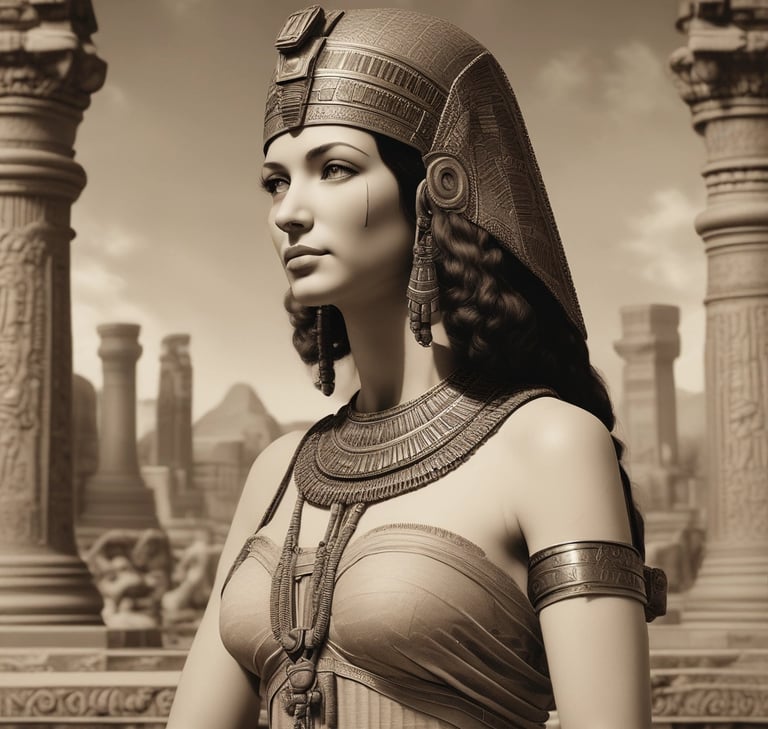
Joan of Arc (c. 1412 - 1431)
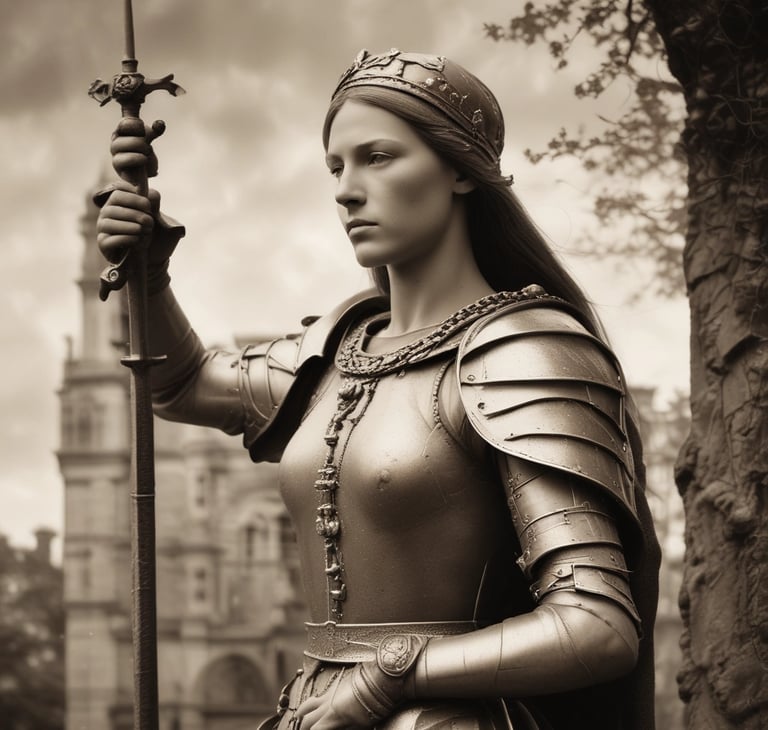
Joan of Arc, a peasant girl from Domremy in northeaster France, altered the course of European history during the Hundred Years' War. Born around 1412, Joan grew up during a period when France was fractured by internal conflict and English occupation. At the age of thirteen, she claimed to experience divine visions instructing her to support Charles VII and help expel English forces from France.
In 1429, Joan persuaded Charles to allow her to accompany French troops to the besieged city of Orleans. Despite having no formal military training, her presence galvanized French soldiers. The lifting of the Siege of Orleans marked a turning point in the war and paved the way for Charles VII's coronation at Reims, a symbolic and strategic victory.
Joan's success, however, made her a target. Captured by Burgundian allies of the English in 1430, she was sold to the English and tried for heresy. In a politically motivated ecclesiastical court, she was convicted and burned at the stake in 1431 at just nineteen years old. A retrial decades later nullified the charges, and she was canonized as a saint by the Catholic Church in 1920.
Joan's accomplishments transcend military achievement. She reshaped French national identity and demonstrated the power of conviction and moral authority. Her ability to inspire seasoned soldiers and influence royal decision-making as a teenage peasant defied the rigid social and gender hierarchies of medieval Europe.
Today, Joan of Arc remains relevant as a symbol of faith-driven leadership, resistance against oppression, and the power of youth activism. She is invoked in discussions about nationalism, martyrdom, gender roles, and political legitimacy. Her life illustrates how individual courage can influence the trajectory of nations.
Marie Curie (1867 - 1934
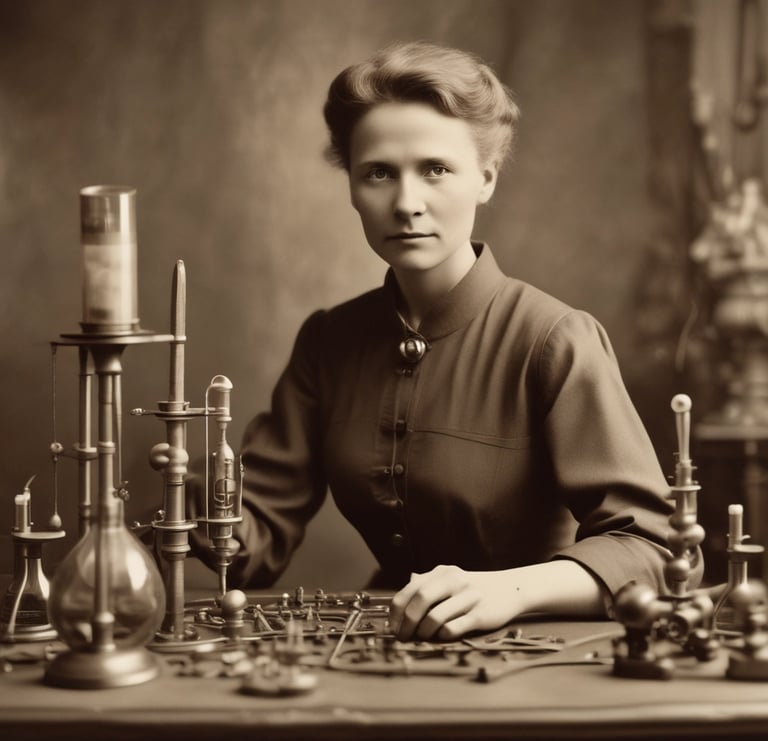
Marie Curie stands among the most accomplished scientists in history. Born Maria Sklodowska in Warsaw, then part of the Russian Empire, she grew up in a society that restricted educational opportunities for women. Determined to pursue science, she moved to Paris to study at the Sorbonne, where she excelled in physics and mathematics.
In collaboration with her husband, Pierre Curie, Marie discovered the elements polonium and radium. Her pioneering research on radioactivity, a term she coined, revolutionized physics and chemistry. In 1903, she became the first woman to win a Nobel Prize, sharing the award in Physics with Pierre Curie and Henri Becquerel. In 1911, she won a second Nobel Prize, this time in Chemistry, becoming the only person to receive Nobel Prizes in two different scientific fields.
During World War I, Curie developed mobile X-ray units to assist battlefield surgeons, directly contributing to medical advancements and saving countless lives. Despite facing sexism and xenophobia, she persisted in her research and mentorship of future scientists.
Curie's relevance today extends beyond her scientific discoveries. She exemplifies perseverance in the face of systemic barriers and underscores the importance of women in STEM. Her work laid the foundation for cancer radiation therapy and modern nuclear physics. In conversations about equity in science and innovation leadership, Marie Curie's legacy continues to inspire.
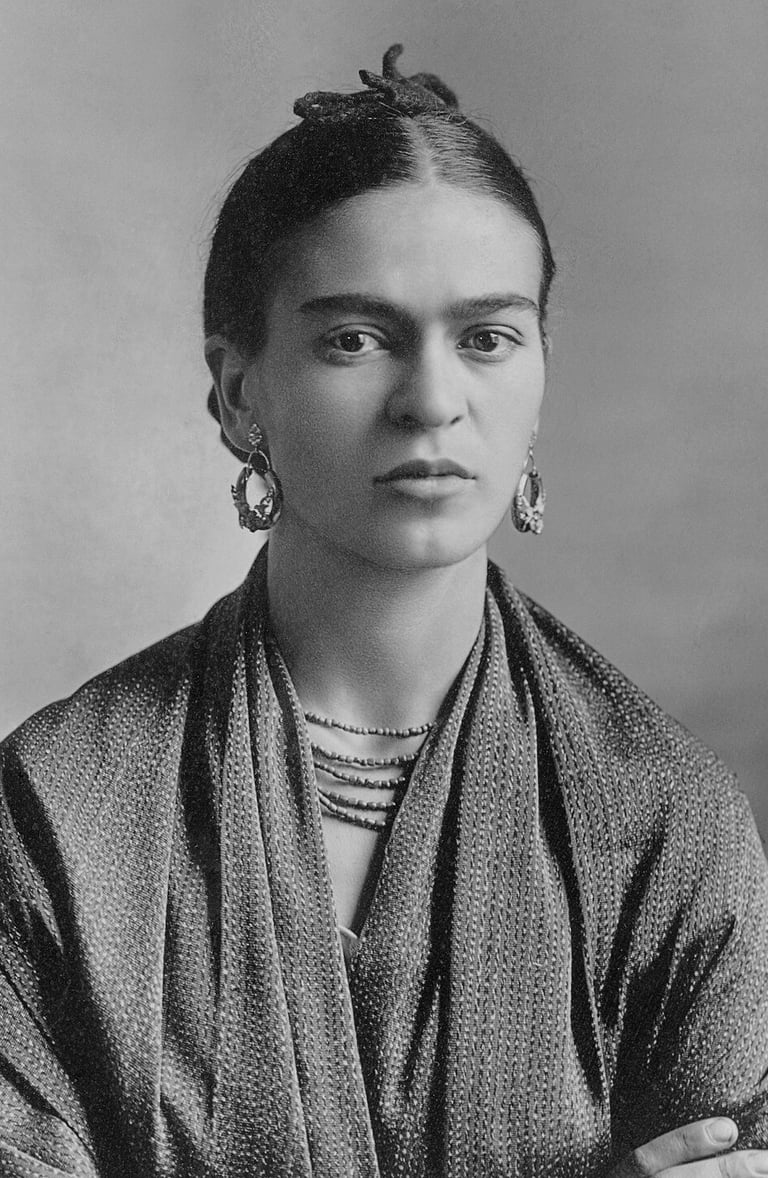
Frida Kahlo
Frida Kahlo is one of the most recognizable and influential artists of the twentieth century. Known for her vivid self-portraits and deeply symbolic imagery, the Mexican painter transformed personal pain, cultural identity, and political beliefs into powerful works of art. Today, she stands not only as a celebrated artist but also as a global symbol of resilience, individuality, and creative expression.
Frida Kahlo was born on July 6, 1907, in Coyoacán, a suburb of Mexico City. Her father was a German photographer, and her mother was of Indigenous and Spanish heritage. This mixed cultural background would later influence her artwork and her strong identification with Mexican heritage. Kahlo initially aspired to study medicine, but her life changed dramatically in 1925 when she was involved in a devastating bus accident. The collision left her with severe injuries, including multiple fractures to her spine, ribs, pelvis, and leg.
During the long and painful recovery that followed, Kahlo began painting while confined to bed. Her parents installed a special easel and mirror so she could paint from her bed, which led to the creation of her famous self-portraits. Over time, these works became the foundation of her artistic identity. Kahlo once famously remarked that she painted herself because she was "the subject I know best."
Her paintings often explored themes of physical suffering, emotional turmoil, and identity. Works such as The Broken Column and The Two Frida's depict the physical and psychological pain she endured throughout her life. Rather than hiding her suffering, Kahlo transformed it into striking visual narratives filled with symbolism, vibrant colors, and surreal elements.
Kahlo's life was also closely intertwined with the politics and art movements of her time. She married the famous Mexican muralist Diego Rivera in 1929. Their marriage was passionate but tumultuous, marked by infidelity, separation, and reconciliation. Despite the challenges, Rivera supported Kahlo's artistic development and introduced her to influential figures in the art and political worlds.
Both Kahlo and Rivera were deeply involved in leftist politics and were members of the Mexican Communist Party. Their home even briefly sheltered the exiled Russian revolutionary Leon Trotsky in the late 1930s. These political influences often appeared in Kahlo's work, which reflected themes of anti-colonial identity, social justice, and Mexican nationalism.
Although Kahlo gained some recognition during her lifetime, she was often overshadowed by Rivera's fame. However, her work began to attract greater attention in the 1940s, when she exhibited internationally and became one of the first Mexican artists to have work displayed in major galleries in the United States and Europe.
Kahlo's health continued to deteriorate due to complications from her earlier injuries. She underwent numerous surgeries and spent extended periods hospitalized. Despite this, she continued to paint, producing some of her most emotionally powerful works during her final years. She died in 1954 at the age of 47.
Decades after her death, Frida Kahlo's reputation grew dramatically. Her artwork became widely celebrated for its exploration of identity, gender, disability, and culture. Today, she is considered one of the most important figures in modern art and a defining voice in Latin American history. Kahlo's work continues to inspire artists, activists, and audiences around the world, proving that her story and her art remain timeless.
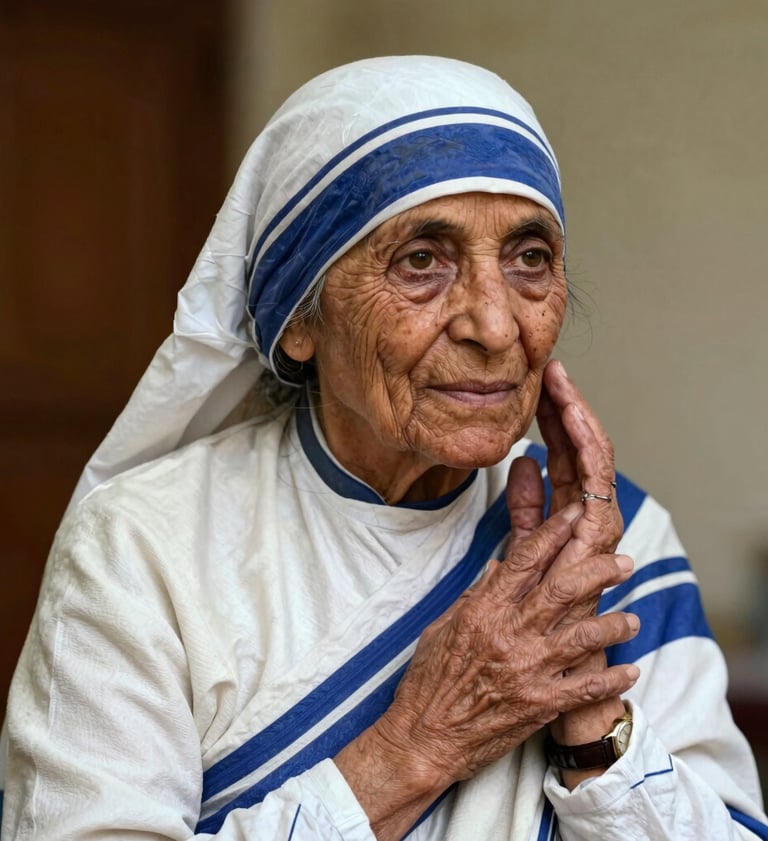
Mother Teresa
Mother Teresa became one of the most recognized humanitarian figures of the twentieth century through her lifelong dedication to serving the poor, the sick, and the forgotten. Known for her simple white sari with blue trim and her unwavering compassion, she devoted her life to helping those living in extreme poverty, particularly in Kolkata, India.
Mother Teresa was born Anjeze Gonxhe Bojaxhiu on August 26, 1910, in Skopje, which is now the capital of North Macedonia. She grew up in a devout Catholic family and showed a strong interest in religious life from an early age. At just 18 years old, she left her home to join the Sisters of Loreto, a Catholic religious order dedicated to education. After training in Ireland, she traveled to India, where she began teaching at a girls' school in Kolkata.
For nearly two decades, Mother Teresa taught and later served as the school's principal. However, in 1946, she experienced what she later described as a "call within a call." During a train journey, she felt a spiritual conviction to leave the convent and dedicate her life directly to helping the poorest people on the streets of Kolkata.
In 1950, she founded the Missionaries of Charity, a Catholic religious congregation devoted to serving "the poorest of the poor." The organization began with a small group of followers but quickly grew as more volunteers joined the mission. The sisters worked in slums, hospices, and orphanages, offering care to those suffering from illness, homelessness, and abandonment.
One of the most notable projects established by Mother Teresa was NIrmal Hriday, or the "Home for the Dying," where people who were terminally ill or dying on the streets could receive medical care and dignity in their final days. The Missionaries of Charity also created shelters for orphaned children, clinics for the sick, and food distribution programs for the hungry.
Mother Teresa's work gained international attention during the 1960s and 1970s as journalists and photographers documented the challenging conditions in which she and her sisters worked. Her efforts were widely praised for bringing compassion and dignity to individuals who had been ignored by society. In recognition of her humanitarian contributions, she was awarded the Nobel Peace Prize in 1979.
When accepting the prize, Mother Teresa emphasized the importance of love, kindness, and service to others. She famously said that the greatest poverty in the world was not only hunger or homelessness, but the feeling of being unwanted or unloved.
Over time, the Missionaries of Charity expanded far beyond India. The organization established missions in more than 100 countries, providing support to refugees, people with HIV/AIDS, victims of natural disasters, and people experiencing poverty in communities around the world.
Mother Teresa continued her work despite declining health in her later years. She died on September 5, 1997, but her legacy endured through the global network of humanitarian services she created. In 2016, she was canonized as Saint Teresa of Calcutta by Pope Francis, formally recognizing her lifelong commitment to charity and compassion. Today, Mother Teresa remains a powerful symbol of service and empathy. Her life's work reminds the world that even small acts of kindness can bring hope and dignity to those who need it most.
Catherine the Great
Catherine the Great, also known as Catherine II of Russia, stands among the most powerful and influential female rulers in world history. Serving as Empress of Russia from 1762 to 1796, she transformed the Russian Empire into one of Europe's dominant powers while promoting education, culture, and the intellectual ideals of the Enlightenment. Her reign marked a period of expansion, reform, and cultural growth that permanently shaped Russia's place in global history.
Catherine was born in 1729 as Sophie Friederike Auguste von Anhalt-Zerbst in the Kingdom of Prussia, now part of modern-day Germany. Born into the minor German nobility, she was not originally destined to rule one of the world's largest empires. However, her life changed dramatically when she was selected to marry the future Russian emperor, Peter III. After arriving in Prussia as a teenager, she converted to Russian Orthodoxy, adopted the name Catherine, and worked diligently to learn the Russian language and culture.
Catherine's marriage to Peter III was unhappy and politically unstable. When Peter became emperor in 1762, his unpopular policies quickly alienated the Russian nobility and military. Within months, Catherine supported a coup that removed him from power. After Peter III was forced to abdicate, shortly before his mysterious death, Catherine assumed the throne as empress, beginning one of the longest and most impactful reigns in Russian history.
As ruler, Catherine the Great pursued ambitious reforms inspired by the ideas of the European Enlightenment. She corresponded with prominent intellectuals, including Voltaire and Denis Diderot, and sought to modernize Russia's legal and educational systems. Catherine promoted the establishment of schools, encouraged scientific learning, and supported the arts. Her patronage helped expand libraries, museums, and theaters, laying the groundwork for Russia's growing cultural influence in Europe.
One of Catherine's most significant achievements was the expansion of Russian territory. During her reign, Russia gained vast lands along the Black Sea and in Eastern Europe. Through wars against the Ottoman Empire and the partitions of Poland, Russia dramatically increased its size and influence. These territorial gains strengthened Russia's strategic position and established it as a major European power.
Despite her progressive interests, Catherine's rule also faced serious challenges. One of the most significant was the massive peasant uprising known as the Pugachev Rebellion in the 1770s. Led by a Cossack rebel claiming to be the deposed Peter III, the revolt threatened imperial authority across large parts of the empire. Catherine ultimately crushed the rebellion, but the event revealed the deep social inequalities that existed within Russian society.
Throughout the reign, Catherine balanced reform with maintaining control over Russia's powerful nobility. While she admired Enlightenment ideals, she relied heavily on aristocratic support, which limited how far her reforms could go, especially regarding the harsh system of serfdom that bound millions of peasants to the land.
Catherine the Great ruled Russia until she died in 1796. By the end of her reign, the empire had grown significantly in territory, power, and prestige. She had strengthened Russia's military, expanded its borders, and elevated its cultural and intellectual life. Today, Catherine the Great is remembered as one of Russia's most formidable rulers, a leader whose ambition, intelligence, and political skill helped transform the Russian Empire into a dominant force in European history.