Mary Todd Lincoln
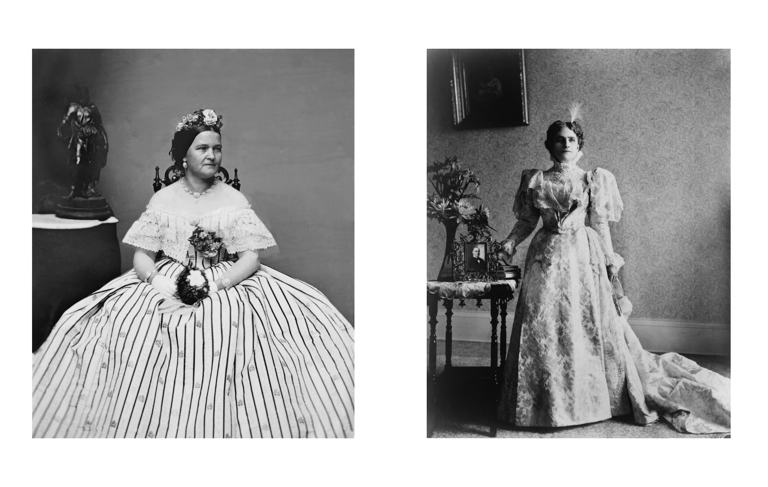
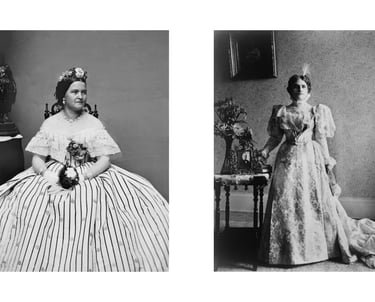
When discussing the most scandalous First Lady in American history, one name consistently rises to the surface: Mary Todd Lincoln. Though modern readers often associate scandal with romantic indiscretions or political corruption, Lincoln's notoriety stemmed from controversy, public backlash, political suspicion, and deeply personal tragedy played out on a national stage during one of America's most volatile eras.
Serving as First Lady from 1861 to 1865 during the presidency of Abraham Lincoln, Mary Todd Lincoln occupied the White House during the Civil War. Born into a wealthy Kentucky slaveholding family, her Southern roots made her a target of suspicion in Washington. Critics and political enemies accused her of Confederate sympathies, alleging that she had family members fighting for the South. In a capital city thick with paranoia and wartime tension, rumors spread quickly. Though no evidence ever proved disloyalty, the whispers damaged her public reputation.
Mary’s spending habits fueled further outrage. Determined to refurbish a White House she considered shabby and unworthy of the nation, she overspent congressional allowances on redecorating projects. Newspapers lambasted her as extravagant and tone-deaf during a time when soldiers were dying on battlefields. Political cartoonists portrayed her as vain and irresponsible, cementing a public image that was difficult to shake.
Tragedy compounded her struggles. She endured the deaths of three of her four sons, including Willie Lincoln, who died in the White House in 1862. The grief profoundly affected her mental health. Following President Lincoln's assassination in 1865, her emotional instability became more visible. In 1875, her surviving son, Robert, had her committed to an asylum, alleging insanity, an episode that shocked the nation and further stigmatized her legacy.
Yet what made Mary Todd Lincoln "scandalous" was not moral failing but her defiance of 19th-century expectations of womanhood. She was politically outspoken, intellectually engaged, and unwilling to remain silent in matters of governance. At a time when First Ladies were expected to be decorative and restrained, she voiced opinions on policy and appointments. Her assertiveness unsettled critics who preferred female invisibility in politics.
In retrospect, Mary Todd Lincoln's story reflects the intersection of war, gender expectations, media sensationalism, and untreated mental illness. Many historians now reassess her legacy with greater empathy, recognizing how grief, trauma, and political hostility shaped public perception.
If scandal is measured by controversy, media frenzy, and national division, Mary Todd Lincoln stands as one of the most embattled First Ladies in American history, a woman whose life reveals as much about the country's anxieties as it does about her own turbulent journey.
Rachel Jackson
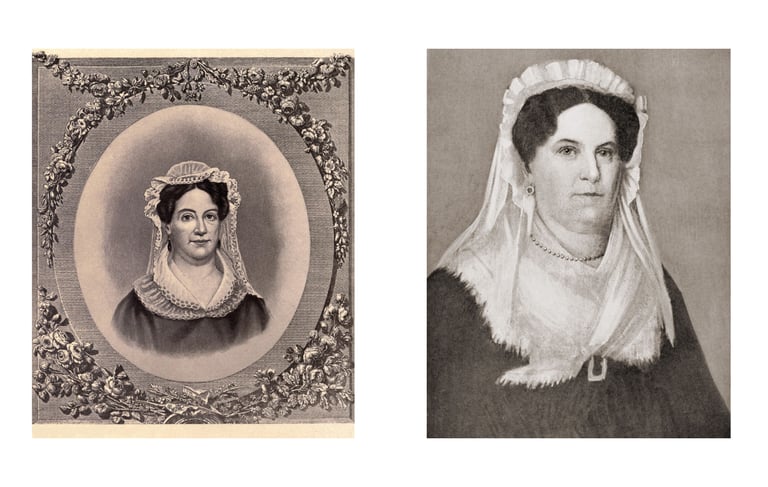
When considering the next most scandalous First Lady in American history, Rachel Jackson often emerges as one of the earliest and most controversial figures to hold the title, though she died before her husband officially took office. Her life became the centerpiece of one of the dirtiest presidential campaigns in American history and set the tone for how brutally political spouses could be treated in the public arena.
Rachel Donelson Robards Jackson married Andrew Jackson under circumstances that ignited a national scandal. Before marrying Jackson in 1791, Rachel had been married to Lewis Robards. Believing her divorce was finalized, she and Jackson wed, only to discover that the legal proceedings had not been fully completed. The couple had to remarry in 1794 after the divorce was properly finalized. Although the issue was legally resolved, it became political ammunition decades later.
During the bitter 1828 presidential election. However, between Andrew Jackson and John Quincy Adams, opponents viciously attacked Rachel's character. Newspapers labeled her an adulteress and a bigamist, accusing the future president of living in sin. The attacks were relentless and deeply personal, reflecting an era when political mudslinging was becoming a defining feature of American democracy. Rachel, described by contemporaries as sensitive and devoutly religious, was devastated by the accusations.
The campaign's stress took a visible toll. Just weeks after Jackson won the presidency in December 1828, Rachel suffered a fatal heart attack. Andrew Jackson publicly blamed her death on the cruel attacks from his political enemies, declaring that his opponents had "murdered" her through slander. She never lived to serve as First Lady; instead, Jackson's niece, Emily Donelson, assumed many of the White House hostess duties.
Rachel Jackson's scandal was not one of misconduct during her time in the White House, but rather one rooted in the evolving nature of American political warfare. Her personal life became a public spectacle, demonstrating how candidates' spouses could be weaponized in partisan battles. The episode also underscored the precarious legal and social position of women in early America, where divorce laws were inconsistent and reputations fragile.
Historians today often view Rachel Jackson with sympathy. What was framed as a moral scandal in the 19th century was, in reality, a legal technicality amplified for political gain. The controversy surrounding her marriage foreshadowed the intense scrutiny and character attacks that would later confront other presidential spouses.
Rachel Jackson's story reveals how early American politics blurred the line between public office and private life. Though she never formally served as First Lady, her experience stands as one of the most painful and politically charged scandals connected to the role, marking the beginning of a long history in which First Ladies would find themselves unwilling participants in America's partisan crossfire.
Edith Wilson
Among the most controversial women to serve as First Lady, Edith Wilson stands out for a reason unlike any other: she effectively ran the executive branch of the United States for more than a year. Her tenure following President Woodrow Wilson's debilitating stroke in 1919 sparked one of the most debated constitutional gray areas in American history.
In October 1919, after tirelessly campaigning for the Treaty of Versailles and U.S. entry into the League of Nations, President Wilson suffered a severe stroke that left him partially paralyzed and significantly impaired. The extent of his condition was concealed from the public, Congress, and even members of his own Cabinet. At the center of the secrecy was Edith Wilson.
Rather than formally transferring power, there was no 25th Amendment at the time to clarify presidential succession; Edith positioned herself as the gatekeeper to the president. She controlled access to him, reviewed documents, and decided which matters were important enough to bring to his bedside. In her later memoir, she described her role as merely a "stewardship," insisting she made no policy decisions herself. However, historians continue to debate how passive that role truly was.
For approximately seventeen months, Edith Wilson filtered communications between the executive branch and the outside world. Cabinet members and legislators often had to rely on her interpretation of the president's wishes. Critics later argued that this amounted to an unelected First Lady exercising executive authority. Supporters countered that she was protecting a vulnerable president while maintaining continuity of government during a delicate post–World War I period.
The political stakes magnified the controversy. The United States was grappling with the ratification of the Treaty of Versailles, a matter that would shape global diplomacy for decades. Wilson's uncompromising stance on the League of Nations ultimately failed in the Senate. Some scholars speculate that a more transparent acknowledgment of his illness or a temporary transfer of power might have altered the outcome.
At the time, much of the public remained unaware of the full situation. The White House issued vague health updates, and journalists operated with limited access. It was only later, through memoirs and historical investigation, that the extent of Edith Wilson's involvement became clearer. Her role prompted later conversations about presidential disability and directly influenced the eventual ratification of the 25th Amendment in 1967, which formalized procedures for transferring power when a president is incapacitated.
Edith Wilson's story challenges traditional definitions of scandal. There was no romantic impropriety or financial corruption. Instead, the controversy centered on constitutional authority, transparency, and democratic accountability. She became, in effect, a shadow executive during a pivotal moment in American governance.
Whether viewed as a protective spouse preserving stability or as an unelected decision-maker operating beyond constitutional limits, Edith Wilson remains one of the most politically consequential and debated First Ladies in U.S. history. Her tenure underscores how crises can blur institutional boundaries and redefine the role of those standing closest to presidential power.