
Shared Origins and Abrahamic Traditions: A Study of Common Lineage and Interpretations
TRADITIONS & CULTURAL CHAOS
3/30/20265 min read

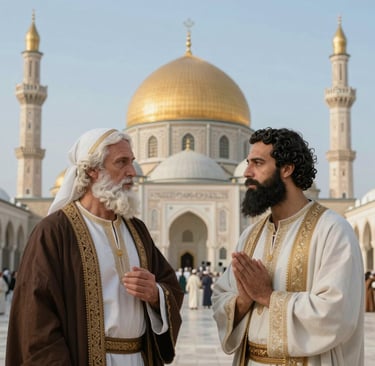
Tracing the Lineage Back to Abraham
The figure of Abraham stands as a pivotal character in the sacred narratives of Judaism, Christianity, and Islam, serving as a common ancestor that links these three major religious traditions. Each religion perceives Abraham not merely as a historical figure but as a symbol of faith, obedience, and divine covenant. In Judaism, Abraham is regarded as the founding patriarch, chosen by God to establish a covenant promising him numerous descendants and land. This covenant is viewed as a foundational aspect of Jewish identity and theology, emphasizing a unique relationship between the Jewish people and God.
In Christian tradition, Abraham's significance is similarly profound. He is celebrated not only for his faith but also as a model of righteousness, illustrating the central principles of Christian belief. The New Testament references Abraham in both the Gospels and the letters of Paul, presenting him as a figure who justifies faith over works. This reflects a seamless transition into discussions regarding the role of faith in salvation history, marking him as a crucial figure in the lineage of Jesus Christ.
Islam also holds Abraham, or Ibrahim, as he is referred to in Arabic, in great esteem. As a prophet and messenger of God, he is revered for his unwavering monotheism and submission to God's will. The Quran highlights Abraham's pivotal role in the narrative of submission, culminating in his willingness to sacrifice his son in obedience. This act is commemorated annually in the festival of Eid al-Adha, reinforcing his legacy of faith in Islamic tradition. The genealogies presented in the biblical texts and the Quran further connect Judaism, Christianity, and Islam, illustrating their shared roots and divergent interpretations of Abraham's life and legacy.
Covenant in Abrahamic Traditions
The concept of covenant is a fundamental pillar of the Abrahamic traditions of Judaism, Christianity, and Islam. Each faith interprets the covenants God made with Abraham, providing the basis for understanding divine promises and human obligations. The notion of covenant encapsulates a sacred agreement, indicating both commitment and mutual responsibility in the relationship between God and humanity.
In Judaism, the covenant established between God and Abraham is particularly significant. This covenant promises that Abraham will be the father of a great nation, a guarantee further expanded by the covenant of circumcision, a physical sign of this divine commitment. Jewish interpretation emphasizes obedience and adherence to God's laws as a means of maintaining the covenant. The ethical and ritual commandments outlined in the Torah are perceived as the covenantal responsibilities that the Jewish people uphold to affirm their standing before God.
Christianity holds a distinctive view of the covenant with Abraham, seeing it as a precursor to the New Covenant established by Jesus Christ. This perspective shifts the focus from mere adherence to law towards a faith-based relationship. Christians believe that Jesus fulfills the promises made to Abraham, thereby establishing a new pathway to salvation that transcends the boundaries of Jewish law and welcomes all believers into a covenantal relationship grounded in grace and faith.
Islam too recognizes the covenant with Abraham, referring to him as a prophet and a model of submission to God. The Quran emphasizes its role in establishing monotheism and highlights the importance of fulfilling one's duties towards God. Muslims believe that the covenant established through Abraham extends to the community of believers, who are expected to uphold principles of justice and worship as part of their commitment to God.
The interplay of these covenants across the Abrahamic faiths illustrates both shared heritage and distinct theological interpretations, fostering a deeper understanding of divine promise and human responsibility in each tradition.
Prophecy and Its Role in the Abrahamic Faiths
The concept of prophecy is central to the three Abrahamic religions: Judaism, Christianity, and Islam. Each of these faiths constructs a unique understanding of prophecy, influenced by its historical context and theological framework. In Judaism, Moses stands out as the quintessential prophet. He is seen not only as the deliverer of the Torah but also as the one through whom God communicates directly. Jewish tradition emphasizes that Moses was unique, stating that he spoke to God' face to face,’ thereby imparting God's will and commandments to the Israelites.
Christianity builds upon the prophetic traditions of Judaism, yet it interprets these roles through the lens of the New Testament. Jesus is regarded as the ultimate fulfillment of prophetic tradition. Christians believe that Jesus's life, death, and resurrection serve as the culmination of God's revelations, positioning him as the Messiah who bridges the human and divine. The New Testament articulates that Jesus's teachings reveal the nature of God's kingdom, expanding the understanding of prophetic authority to include not just foretelling future events but also embodying divine love and sacrifice.
In Islam, prophecy holds significant weight, with Muhammad recognized as the final prophet, or the Seal of the Prophets. Islamic thought asserts that Muhammad received revelations from God, compiled in the Qur'an, which serves as the definitive guide for humanity. The role of prophecy in Islam underscores the belief in a continuous line of prophetic messages culminating in Muhammad, who is viewed as a mediator of God's necessary guidance for both personal conduct and societal ethics.
Thus, while all three faiths acknowledge the importance of prophecy, the interpretations and significance attributed to prophetic figures such as Moses, Jesus, and Muhammad reveal distinctive theological perspectives. These variations not only shape the understanding of divine communication but also underline a common heritage in seeking to decipher God's will through prophetic insight.
Monotheism: A Common Thread Among Abrahamic Religions
Monotheism, the belief in a single, all-powerful God, serves as a significant pillar that unites the three major Abrahamic religions: Judaism, Christianity, and Islam. Each of these faiths, despite their diverse practices and beliefs, upholds the fundamental tenet of worshiping one God, stemming from the teachings attributed to Abraham, a shared patriarch across all three traditions.
In Judaism, the Shema, an essential declaration of faith, emphasizes the oneness of God: "Hear, O Israel: The Lord our God, the Lord is one" (Deuteronomy 6:4). This verse encapsulates the Jewish understanding of God as a singular entity, with attributes of omnipotence, omniscience, and moral perfection. The Jewish perspective on God's nature drives a commitment to ethical living and adherence to the commandments outlined in the Torah, which serve as the foundation for moral behavior.
Christianity builds on the Jewish concept of God, introducing the doctrine of the Trinity, which holds that God is one being in three persons: the Father, the Son, and the Holy Spirit. Despite this complex interpretation, the central idea remains that there is but one God who embodies love and justice. This belief shapes the moral teachings of the New Testament, calling followers to love their neighbors and to exemplify compassion in their daily lives.
Islam, firmly rooted in monotheistic principles, proclaims the absolute oneness of Allah. The Quran emphasizes this through verses that underline God's uniqueness and sovereignty. Muslims are encouraged to submit to Allah's will, which is viewed as a pathway to moral integrity and social justice. The concept of Tawhid, or the oneness of God, is central to Islamic theology, shaping both personal conduct and communal responsibilities.
Historically, the advent of monotheism was revolutionary, especially in a context dominated by polytheistic beliefs. The challenge posed by these newer monotheistic ideas reshaped spiritual discourse and community practices, leading to enduring changes in the religious landscape. This shared element of monotheism not only links Judaism, Christianity, and Islam but also invites exploration of deeper social and ethical implications across these interrelated traditions.