
The Middle Ages: Dark Age or Misunderstood Era?
TRADITIONS & CULTURAL CHAOS
3/24/20264 min read
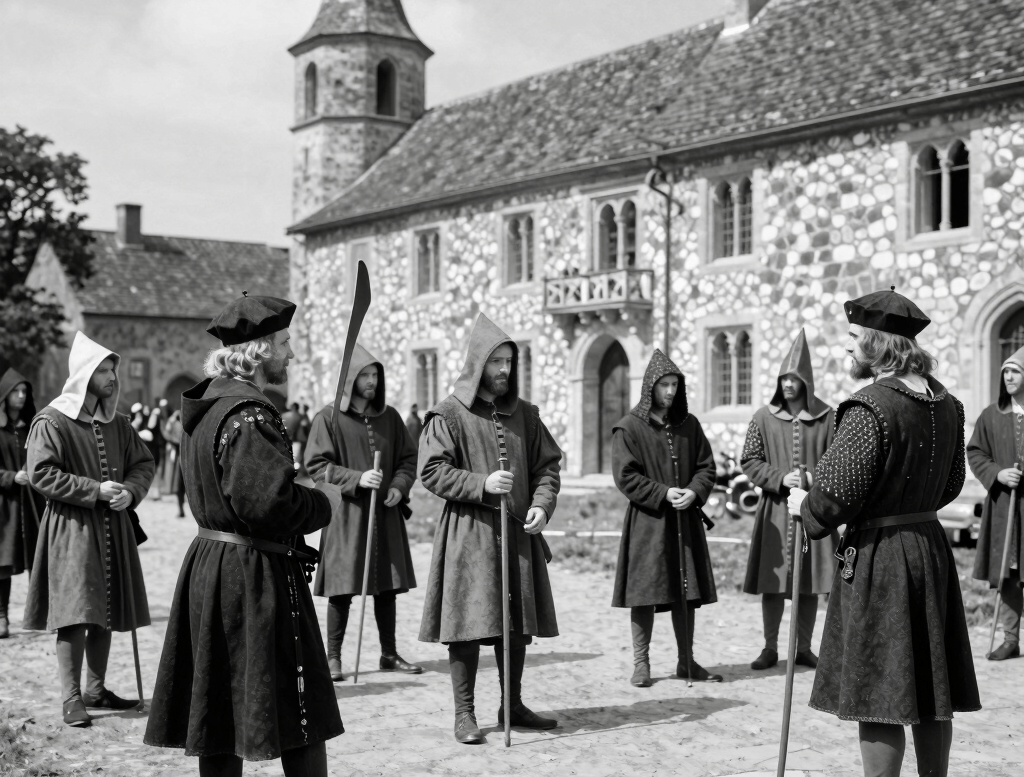
The Stereotype of the Middle Ages as a Dark Age
The portrayal of the Middle Ages as a so-called "Dark Age" is a narrative that has persisted for centuries. This characterization stems largely from Renaissance thinkers who sought to elevate their own era by contrasting it with what they perceived as the ignorance and barbarism of the preceding centuries. During the Renaissance, scholars aimed to revive classical knowledge and humanist ideals, leading to a disparaging view of the Middle Ages as a time of cultural and intellectual stagnation.
The designation of the Middle Ages as a Dark Age is often attributed to the societal upheaval following the fall of the Roman Empire. While the collapse of this vast empire resulted in significant disruptions to education, governance, and infrastructure, it is crucial to recognize that this period was not devoid of progress. Various cultures flourished during the Middle Ages, with advancements in agriculture, architecture, and art, countering the notion of total decline.
Moreover, the stereotype has been perpetuated by selective historical narratives that emphasize decline while overlooking the achievements of medieval scholars. The establishment of universities in the 12th century, the preservation of classical texts by monastic scribes, and the intellectual discourse in the Islamic world all serve as useful counterexamples to the Dark Age thesis, illustrating a vibrant scholarly landscape in many regions.
In essence, the term "Dark Ages" simplifies the complexities of a period marked by transformation and adaptation. The stereotype fails to account for the various developments across Europe and beyond, which together contribute to an expansive and rich tapestry of history. Thus, it is essential when studying the Middle Ages to confront these traditional stereotypes and appreciate its multifaceted character, rather than relegating it to the shadows of ignorance.
Rediscovery of Knowledge: Innovation During the Middle Ages
The Middle Ages, often called the "Dark Ages," are frequently misconceived as a period devoid of intellectual achievement. In reality, this era was marked by significant advancements that laid the groundwork for the Renaissance and the modern age. A remarkable aspect of this period was the establishment of universities across Europe, which became centers of learning and scholarship. Notable institutions such as the University of Bologna and the University of Paris emerged, offering diverse fields of study, including philosophy, medicine, and theology.
In addition to the institutionalized education, the preservation and translation of classical texts were pivotal in rediscovering ancient knowledge. Monastic scholars diligently copied and safeguarded works from antiquity, ensuring that texts by Aristotle, Plato, and other luminaries survived through the ages. This painstaking effort allowed subsequent generations to access foundational concepts that influenced various disciplines.
The influence of Islamic scholars during this time cannot be overstated. The transmission of knowledge from the Islamic Golden Age played an integral role in reviving classical wisdom. Scholars such as Al-Farabi, Avicenna, and Al-Ghazali contributed substantially to philosophy and science, while their translations and commentaries on Greek texts were instrumental for European scholars. These efforts not only reintroduced lost knowledge but also formed a crucial bridge between Eastern and Western thought.
Technological innovations also flourished during the Middle Ages. The invention of the mechanical clock, improvements in windmill technology, and the introduction of the astrolabe were critical advancements that transformed various aspects of life, from timekeeping to agriculture and navigation. This era, therefore, stands as a testament to human resilience and intellectual curiosity, highlighting a period of growth rather than mere stagnation.
Cultural Diversity of the Middle Ages
The Middle Ages, often characterized as a monolithic "Dark Age," was in reality a vibrant period marked by profound cultural diversity and interplay. This era witnessed the significant presence of Christians, Muslims, and Jews who coexisted across various regions, particularly in Spain and the Mediterranean. Their interactions fostered a fertile environment for the exchange of ideas, art, literature, and scientific advancement. The vibrant cultural landscape of the Middle Ages was shaped by these cross-cultural exchanges, which defy the simplistic notion of a stagnant society.
In regions such as Al-Andalus, Muslim, Christian, and Jewish communities shared knowledge and collaborated, leading to remarkable developments in mathematics, astronomy, and philosophy. The translation movement during this period played a crucial role in preserving and disseminating classical texts, ensuring that the intellectual achievements of antiquity were not lost. This collaborative spirit facilitated the rise of key figures, such as Maimonides in philosophy and Averroes in sciences, illustrating the interdependence of cultures in advancing human thought.
Moreover, cultural exchanges extended to the realms of art and literature. The intricate designs of Islamic art influenced Gothic architecture, while the themes of chivalry prevalent in medieval literature integrated elements from both Christian and Muslim narratives. The Crusades, often seen only through a lens of conflict, also sparked interest in cultural exchange, as returning pilgrims brought back exotic goods and novel ideas that enriched medieval European culture.
Ultimately, the Middle Ages represent not a mere Dark Age but rather a dynamic and complex tapestry of cultural interactions that shaped the course of European and Mediterranean history. The diverse experiences across regions compel a reconsideration of the era, revealing a period that was as much about collaboration and creativity as it was about conflict.
Rethinking the Legacy of the Middle Ages
The prevailing notion of the Middle Ages as a "Dark Age" is gradually being challenged by contemporary historians, who advocate for a more nuanced understanding of this complex period. This reevaluation is driven by a growing body of scholarship that highlights the era's significant contributions to modern society, prompting us to reconsider its historical legacy.
Recent studies have highlighted advancements across various fields during the Middle Ages, including art, literature, science, and architecture. Contrary to the stereotype of stagnation, the period witnessed remarkable achievements that set the foundation for future developments. For instance, the establishment of universities in the 12th century catalyzed intellectual growth, fostering critical thinking and scholarly pursuits that are hallmarks of modern education. Additionally, innovations such as Gothic architecture exemplify the period's artistic creativity, showcasing intricate designs that continue to inspire contemporary architecture.
Beyond external manifestations, the social and cultural dynamics of the Middle Ages also contributed to the development of European identity. The era was marked by the emergence of a middle class, complex trade networks, and an evolving political landscape, all of which laid the groundwork for a more interconnected society. Modern historians emphasize the importance of these shifts in facilitating progress towards the Renaissance and beyond, thereby dismantling the outdated narrative that views the Middle Ages solely as a bridge between antiquity and modernity.
By acknowledging the broader scope of the Middle Ages, contemporary scholarship invites a balanced perspective that recognizes the period's richness. It emphasizes that the Middle Ages were not merely an era to be glossed over, but a crucial period characterized by innovation, adaptation, and transition that shaped the trajectory of European history.